Can a 2-1 Buydown Lower Your Mortgage Payment in San Antonio?
Yes. A 2-1 buydown can lower your mortgage payment for the first two years of your loan, and in today's San Antonio market, the seller may be willing to pay for it. The buydown is funded up front, often with seller concessions, so your rate is temporarily 2% lower in year one and 1% lower in year two before settling at your full note rate in year three.
With 30-year rates averaging 7.32% in Freddie Mac's October 22, 2026 survey and San Antonio homes sitting on the market longer, it's worth knowing how this tool works before you write an offer. (That rate is a national average for context only. It is not an offer or a quote of TLP mortgage rates.
Why this question matters in San Antonio right now
The local market has shifted toward buyers. According to San Antonio Board of Realtors September 2026 data reported by Texas Public Radio, the area had about six months of housing supply, homes averaged nearly three months on the market, and the median price dipped about 2% year over year to just under $302,000.
More choices and more time usually mean more room to negotiate. At the same time, SABOR board chair Ed Zapata noted that "the bigger issue for San Antonio buyers continues to be overall affordability." That's where a conversation about seller concessions, and what to do with them comes in.
What is a 2-1 buydown?
A 2-1 buydown is a temporary interest rate buydown. Someone (often the seller or builder) deposits money into an account at closing. That account covers part of your monthly payment for the first two years:
Year 1: your payment is calculated at 2% below your note rate
Year 2: your payment is calculated at 1% below your note rate
Years 3 to 30: you pay the full note rate
There's also a 1-0 buydown (one year at 1% lower). Under Fannie Mae's guidelines, a temporary buydown can't reduce the rate by more than 3%, can't last more than three years, and the rate can rise no more than 1% per year.
A simple example (for illustration only)
Say you buy a $300,000 home with 5% down and borrow $285,000 on a 30-year fixed loan. Using a hypothetical 7.25% note rate, principal and interest would look roughly like this: concessions and
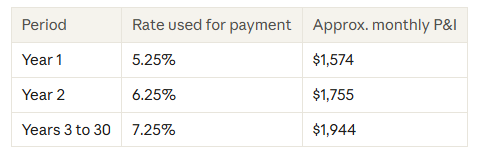
The buydown in this example costs about $6,700, the total of those monthly savings over two years. This is not a rate quote or an offer. Your actual rate, payment, and costs depend on your credit, loan type, down payment, and the market on the day you lock. Taxes, insurance, and mortgage insurance are not included.
Seller concessions: How much can the seller contribute?
Seller concessions (lenders call them "interested party contributions") are dollars the seller agrees to pay toward your costs. Each loan program sets its own limits:
Conventional (Fannie Mae), primary home or second home: up to 3% of the price when you put down less than 10%, 6% when your loan-to-value is between 75.01% and 90%, and 9% at 75% or less. Investment properties are capped at 2%.
FHA: interested parties may contribute up to 6% of the sales price toward closing costs, discount points, and buydowns, per HUD guidance.
VA: seller concessions are capped at 4% of the home's reasonable value, and normal closing costs paid by the seller don't count toward that 4%.
These limits are based on the lower of the sales price or appraised value. Concessions generally can't be used for your down payment, and anything above the limit can reduce the price used for your loan. Your loan officer will confirm what applies to your specific loan.
Should you use concessions for a buydown, closing costs, or a lower price?
There's no one right answer, and that's why strategy matters. A few things to weigh:
Closing costs first? If cash to close is your biggest hurdle, covering costs may matter more than a lower payment.
Buydown for breathing room? If you're stretching into a new payment, two years of lower payments can help you settle in, furnish the house or build savings.
Price reduction? A lower price lowers your payment for the full life of the loan, but a dollar off the price usually saves less per month in the early years than a dollar toward a buydown.
Permanent buydown (discount points)? Paying points lowers your rate for the life of the loan instead of just two years.
Talk through the trade-offs with your agent and loan officer before you make an offer, so you ask the seller for the structure that fits your goals.
Important things to know before you count on a buydown
You qualify at the full note rate. Fannie Mae requires lenders to qualify you at the note rate, not the bought-down rate. Plan your budget around the year-three payment.
Unused funds aren't lost. If you sell or refinance during the buydown period, Fannie Mae's guidelines say remaining funds are applied toward the payoff or handled as the buydown agreement states.
Don't bank on refinancing. Rates may go down, or they may not. A buydown should make sense even if you keep the loan.
Primary homes and second homes only. Conventional temporary buydowns are not available on investment properties or cash-out refinances.
For San Antonio realtors: a tool for listings that sit
With homes averaging nearly three months on the market, a buydown offer can help a listing stand out without a big price cut. Agents can advertise a seller-paid buydown as an incentive. TLP Mortgage can help you model the numbers for your buyers or sellers so everyone sees the payment picture before negotiating.
Let's map out your options together.
Every buyer's situation is different, and the right move depends on your budget, timeline, and goals. The TLP Mortgage team is happy to walk you through a side-by-side look at a 2-1 buydown, closing cost help, and a lower price, with no pressure. That's mortgage strategy built for real life. Reach out to our San Antonio team to start the conversation.
house,
Rates and programs subject to change. Not a commitment to lend. All loans are subject to credit approval, underwriting, program eligibility, and availability. This article is for general education and is not tax or legal advice.
©Pilgrim Mortgage® NMLS #225091 | DBA TLP Mortgage Branch NMLS #2786297 | Equal Housing Lender
Who pays for a 2-1 buydown? Usually the seller or builder, through seller concessions negotiated in your contract. A buyer can also pay for one. The cost is roughly the total payment savings over the two-year buydown period.
Do I qualify for my loan at the lower buydown rate? No. For conventional loans, Fannie Mae requires lenders to qualify you at the full note rate. Your budget should be built around the year-three payment.
How much can a seller pay toward my costs in Texas? It depends on the loan program, not the state. Conventional limits range from 3% to 9% for a primary home based on your down payment, FHA allows up to 6% of the sales price, and VA caps concessions at 4% of the home's reasonable value. Your loan officer will confirm what applies to you.
What happens to unused buydown money if I refinance or sell? Under Fannie Mae guidelines, remaining funds are applied toward the loan payoff or handled as your buydown agreement specifies.
Is a 2-1 buydown better than a lower purchase price? It depends on your goals. A buydown gives bigger savings in the first two years, while a price reduction gives smaller savings for the life of the loan. A side-by-side comparison with your loan officer can help you decide.